How to Calculate Overtime Pay in 2026: Formula, Examples and 4 Costly Mistakes
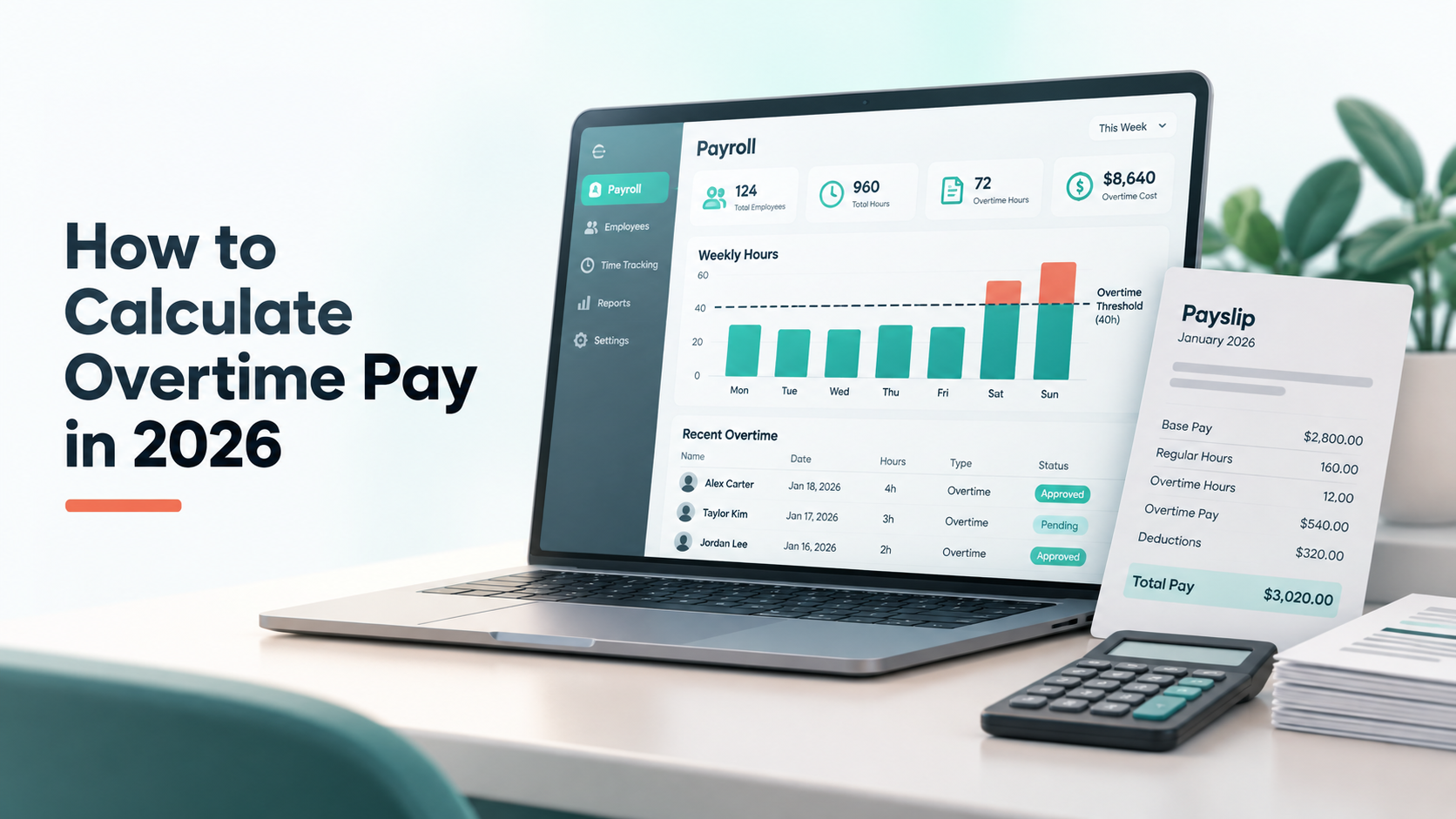
Overtime is the most common source of payroll disputes, and almost none of them are caused by the arithmetic. They are caused by disagreement about the inputs: which hours counted, when the week started, and what the hourly rate actually was.
This walks through the calculation, then through the four places it usually goes wrong.
The basic calculation
The common rule, and the one most jurisdictions base their version on, is time-and-a-half beyond a weekly threshold — typically 40 hours.
- Regular pay = hours up to the threshold × hourly rate
- Overtime pay = hours above the threshold × hourly rate × 1.5
A worked example. Someone on $20/hour records 47 hours in a week:
- 40 regular hours × $20 = $800
- 7 overtime hours × $20 × 1.5 = $210
- Total: $1,010
That is the whole formula. Now the parts that actually cause arguments.
Where it goes wrong
1. The workweek is not defined
Overtime is almost always calculated per workweek, and a workweek is a fixed, recurring 168-hour period that you declare — not “however the calendar falls”. If you have never written down when your workweek starts, two people calculating the same timesheet can get different answers and both be defensible.
Pick a start (many use Monday 00:00 or Sunday 00:00), write it in the handbook, and make sure your attendance system groups by the same boundary. Shifts that cross midnight are where this bites.
2. Averaging across two weeks
A 50-hour week followed by a 30-hour week is not two 40-hour weeks. The first week owes 10 hours of overtime; the second does not claw it back. Averaging across a two-week pay period is one of the most common underpayments, and because it looks reasonable it tends to persist for years before anyone challenges it.
3. The rate is not just the base rate
In many jurisdictions overtime is calculated on the regular rate of pay, which includes non-discretionary bonuses, shift differentials and commissions — not simply the base hourly figure on the contract. If someone earned a production bonus that week, their overtime rate for that week is higher than their usual one.
4. Paid leave counted toward the threshold
Overtime thresholds usually apply to hours worked. A week with 32 worked hours and 8 hours of paid holiday is 40 paid hours but 32 worked hours — so an extra 4 hours of work that week is typically not overtime. Systems that treat leave and attendance as the same kind of row get this wrong by default.
Salaried does not automatically mean exempt
The most expensive misconception in this area is that paying a salary removes the overtime obligation. In most frameworks exemption depends on a combination of how someone is paid, how much, and what they actually do day to day. Job title carries no weight at all — calling someone a manager does not make them exempt if the role is not genuinely managerial.
Misclassification is assessed retrospectively, often across years, which is what makes it costly. If you are unsure about a specific role, that is a question for an employment lawyer in your jurisdiction, not for a blog post.
What to keep
Whatever system you use, the records that resolve a dispute are: hours worked per day with their timestamps, the declared workweek boundary, the rate applied and how it was derived, leave taken and whether it counted toward the threshold, and an audit trail for any correction. Retention requirements vary, but multiple years is a reasonable default.
The practical point is that all five need to come from the same place. When hours live in one system, leave in another and rates in a spreadsheet, reconstructing a single disputed paycheck from eight months ago becomes a day of work — which is exactly when you discover whether your records agree with each other.
Shiftena keeps attendance, leave and salary profiles in one workspace, so the overtime figure is computed from the same rows the attendance screen shows rather than from an export. You can try it free for 30 days without a card.
This is general guidance, not legal advice. Overtime rules differ substantially between countries and, in the US, between states — confirm the specifics for your jurisdiction before relying on any of it.
Read next